Welcome to Shandong Charming Steel Co.,Ltd !
Tel : 0086 18264535555 E-mail : cmgc@sdcmsteel.cn


ONLINE MESSAGE
304 stainless steel H-beam
H-section steel is a kind of economic section and high-efficiency section with more optimized cross-sectional area distribution and more reasonable strength-to-weight ratio.
Category :
Details description
product description
H-section steel is a kind of economic section and high-efficiency section with more optimized cross-sectional area distribution and more reasonable strength-to-weight ratio. It is named because its section is the same as the English letter "H". Since the various parts of the H-shaped steel are arranged at right angles, the H-shaped steel has the advantages of strong bending resistance, simple construction, cost saving and light structure weight in all directions, and has been widely used.
Featuresedit
The inner and outer sides of the H-shaped steel flange are parallel or nearly parallel, and the flange ends are at right angles, hence the name Parallel Flange I-beam. The thickness of the web of the H-beam is smaller than that of the ordinary I-beam with the same height of the web, and the width of the flange is larger than that of the ordinary I-beam with the same height of the web, so it is also named wide-edge I-beam. Determined by the shape, the section modulus, moment of inertia and corresponding strength of H-beams are significantly better than ordinary I-beams of the same single weight. Used in metal structures with different requirements, whether it bears bending moment, pressure load, or eccentric load, it shows its superior performance. Compared with ordinary I-beam, it can greatly increase the load-bearing capacity and save metal by 10%-40%. H-shaped steel has wide flanges, thin webs, multiple specifications, and flexible use. It can save 15%-20% of metal when used in various truss structures. Because the flanges are parallel inside and outside, and the edges are at right angles, it is easy to assemble into various components, which can save about 25% of the welding and riveting workload, which can greatly accelerate the construction speed of the project and shorten the construction period.
Purposeedit
Because of the above advantages, H-beams are widely used, mainly for: various civil and industrial building structures; various large-span industrial plants and modern high-rise buildings, especially industrial plants in areas with frequent seismic activities and high-temperature working conditions; requirements Large-scale bridges with large bearing capacity, good cross-section stability and large spans; heavy equipment; highways; ship skeletons; mine supports; foundation treatment and dam engineering; various mechanical components.
Classificationedit
There are many specifications of H-beam products, and the classification methods are as follows. (1) According to the flange width of the product, it is divided into wide flange, middle flange and narrow flange H-shaped steel. The flange width B of the wide flange and middle flange H-shaped steel is greater than or equal to the web height H. The flange width B of the narrow flange H-shaped steel is approximately equal to one-half of the height H of the web. (2) Divided into H-shaped steel beams, H-shaped steel columns, H-shaped steel piles, and extremely thick flange H-shaped steel beams according to product usage. Sometimes parallel leg channel steel and parallel flange T-shaped steel are also included in the scope of H-shaped steel. Generally, narrow flange H-shaped steel is used as beam material, and wide-flange H-shaped steel is used as column material. According to this, it is also called beam H-shaped steel and column H-shaped steel. (3) According to the production method, it is divided into welded H-beam and rolled H-beam. (4) Divided into large, medium and small H-beams according to size specifications. Generally, products with a web height H above 700mm are called large, 300-700mm is called medium, and less than 300mm is called small. By the end of 1990, the world's largest H-section steel web had a height of 1200mm and a flange width of 530mm.
Internationally, the product standards of H-beams are divided into two categories: the imperial system and the metric system. The United States, Britain and other countries adopt the imperial system, while China, Japan, Germany, and Russia adopt the metric system. Although the units of measurement used in the imperial system and the metric system are different, most H-beams use four sizes to indicate their specifications, namely: web height h. Flange width b, web thickness d and flange thickness t. Although countries around the world have different expressions of H-beam size specifications. However, the size range and dimensional tolerances of the products produced are not much different.
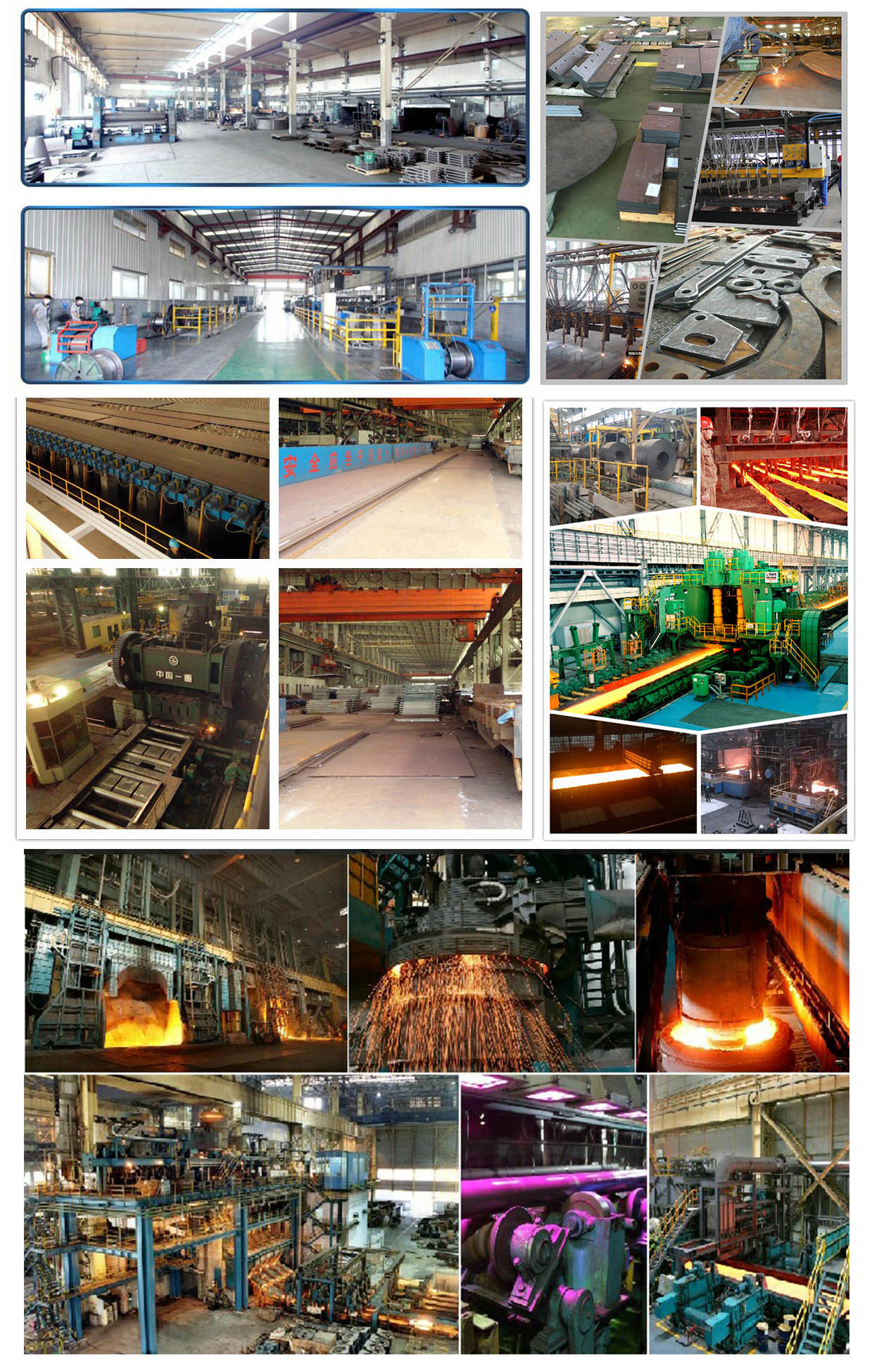
Factory appearance
Packing & Delivery

Our Company
Shandong Chengming Steel Co.,Ltd
Our company supplies cold/hot-rolled stainless steel sheets,stainless steel bars ,stainless steel coil stainless steel pipes,lead plate,bearing steel,spring steel,steel plate pile,tank plate,alloy steel plate,weather resistant steel plate and wear resistant plate to many steel factories from at home and abroad, including Shanxi Taigang Iron& Steel CO,.LTD (TISCO) Zhangjiagang Pohang (ZPSS), Shanghai Krupp, Ningbo Baoxin and steel factories in Taiwan area, Mainland Chinese and foreign countries and regions.
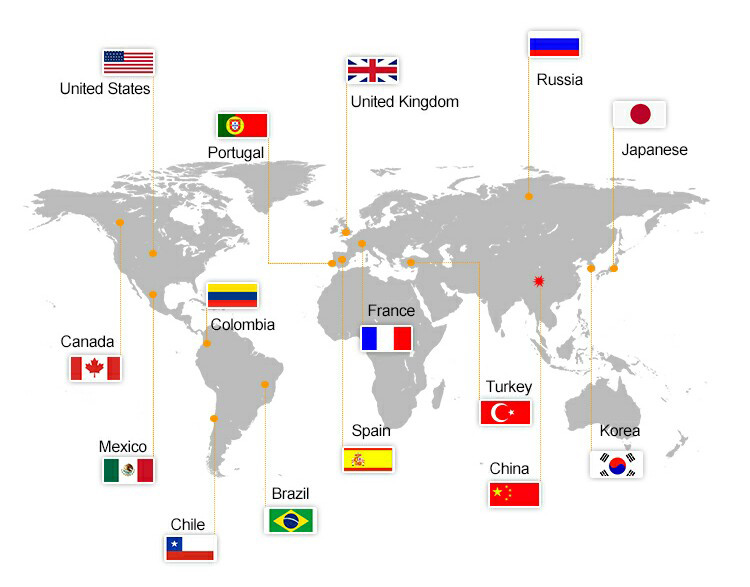
Our annual capacity is 25, 000 tons. The Annual Domestic Sale is 20 million, Annual Exported Sale about 12 million dollars.Our products supplied to more than 20 countries, such as Indonesia, Spain, Japan, Korea, Vietnam, Italy, Israel,Australia, Malaysia, Brazil, Pakistan, U. A. E, Peru, India etc. Good quality has been getting more and more prise from buyers at home and abroad.Our long-term business lines are 304 .202, 201 .430.409L, 304L, 316L, 309S and 310S, Finish: 2B ,BA ,NO.1 NO.4 ,HL, NO.8 and so on . For the sheets and coils,the thickness ranging from 0.3mm to 100mm.For the bars,the diameter ranging from 1mm to 300mm.For the pipes ,we have seamless pipe and weld pipe. Meanwhile, our company is also engaged in the long-term supply of homemade & imported medium and thick plates,galvanized or carbon
ONLINE MESSAGE
RELATED PRODUCTS
Steel Sheet pile Description The steel sheet pile is a kind of steel structure with a linkage device on the edge, and this linkage device can be freely combined to form a continuous and compact steel structure with a retaining wall or a water retaining wall. The steel sheet pile is a type of steel with a lock. Its cross-sections are straight, trough and Z-shaped. There are various sizes and interlocking forms. The common ones are Larsonian, Lakwanaian and so on. Its advantages are: high strength, easy to penetrate hard soil; can be constructed in deep water, if necessary, add diagonal support to become a cage. It has good waterproof performance; it can be formed into cofferdams of various shapes as required and can be reused many times. Therefore, it has a wide range of uses. classification Steel sheet pile products are classified into cold-formed thin-walled steel sheet piles and hot-rolled steel sheet piles according to the production process. (1) There are two types of cold-formed steel sheet piles: non-bite type cold-formed steel sheet piles (also called channel plates) and bite type cold-formed steel sheet piles (divided into L-shaped, S-shaped, U-shaped, and Z-shaped) . Production process: Use thinner plates (commonly used thickness 8mm ~ 14mm) to be continuously rolled and formed in the cold bending unit. Advantages: less investment in the production line, lower production cost, flexible control of product size. Disadvantages: the thickness of each part of the pile body is the same, the section size cannot be optimized, which leads to an increase in steel consumption, the shape of the lock part is difficult to control, the joint is not tightly buckled, and the water cannot be stopped, and the pile body is easy to tear during use. (2) Hot-rolled steel sheet piles Hot-rolled steel sheet piles in the world mainly include U-shaped, Z-shaped, AS-shaped, H-shaped and dozens of specifications. The production, processing and installation processes of Z-type and AS-type steel sheet piles are relatively complicated, and are mainly used in Europe and America; U-type steel sheet piles are mainly used in China. Production process: It is formed by high temperature rolling by a section steel rolling mill. Advantages: standard size, superior performance, reasonable cross-section, high quality, and tight water barrier for the lock bite. Disadvantages: technical difficulty is relatively high, production cost is relatively high, specification series are not flexible. In engineering construction, the application range of cold-formed steel sheet piles is relatively narrow, and most of them are used as supplementary materials for applications. Hot-rolled steel sheet piles have always been the leading product for engineering applications. Based on the many advantages of steel sheet piles in construction operations, the General Administration of Quality Supervision, Inspection and Quarantine of the People's Republic of China and the National Standardization Management Committee issued the national standard for "Hot Rolled U-shaped Steel Sheet Pile" on May 14, 2007, and on December 1, 2007 Formally implemented. At the end of the 20th century, Maanshan Iron & Steel Co., Ltd. produced more than 5,000 tons of U-shaped steel sheet piles with a width of 400mm with the introduction of the universal rolling mill production line from abroad. The U-shaped steel sheet piles were successfully used in the cofferdam of Nenjiang Bridge and the 300,000 tons of Jingjiang New Century Shipyard. Ton shipyard and Bangladesh flood control projects. However, due to the low production efficiency, poor economic efficiency, low domestic demand and insufficient technical experience during the trial production period, continuous production was not possible. According to statistics, the annual consumption of steel sheet piles in my country remains at about 30,000 tons, accounting for only 1% of the world’s total, and it is limited to permanent projects such as the construction of some ports, wharves, and shipyards, as well as the construction of bridges, cofferdams, and foundation pit support Temporary works. The cold-formed steel sheet pile is continuously rolled and formed by the cold-formed unit, and the side lock can be continuously overlapped to form a steel structure of the sheet pile wall. The cold-formed steel sheet pile is made of thinner plates (commonly used thickness is 8mm-14mm) and processed by cold-formed forming units. The production cost is lower and the price is cheap, and the fixed-length control is more flexible. However, due to the simple processing method, the thickness of each part of the pile body is the same, the cross-sectional size cannot be optimized, which leads to an increase in steel consumption; the shape of the lock part is difficult to control, the joint is not tightly buckled, and the water cannot be stopped; limited by the capacity of cold bending processing equipment, It can produce low-strength ste
The steel sheet pile is a kind of steel structure with a linkage device on the edge, and this linkage device can be freely combined to form a continuous and compact steel structure with a retaining wall or a water retaining wall.
Stainless steel round steel belongs to the category of long products and bars. The so-called stainless steel round steel refers to a long product with a uniform circular cross section




Contact Us
Tel : 0086 18264535555
Email : cmgc@sdcmsteel.cn
WhatsApp:0086 18264535555
Add : Phoenix Industrial Park, Dongchangfu District, Liaocheng City, Shandong Province